KSh25,000.00 Original price was: KSh25,000.00.KSh22,000.00Current price is: KSh22,000.00.
Manual Operation: Mixes animal feed ingredients without requiring electricity, making it suitable for farms with limited power access.
Drum-Style Design: Helps combine compatible feed ingredients into a more uniform mixture.
Multi-Purpose Feed Mixing: Suitable for mixing dry ingredients such as crushed grains, maize meal, bran, and other compatible feed components.
Suitable for Various Livestock: Supports feed preparation for poultry, cattle, goats, sheep, pigs, and other farm animals.
Reduced Mixing Effort: Offers a practical alternative to mixing feed entirely by hand.
Convenient Batch Preparation: Helps farmers prepare feed in manageable quantities according to their needs.
Easy Maintenance: Regular cleaning and inspection help maintain performance and feed hygiene.

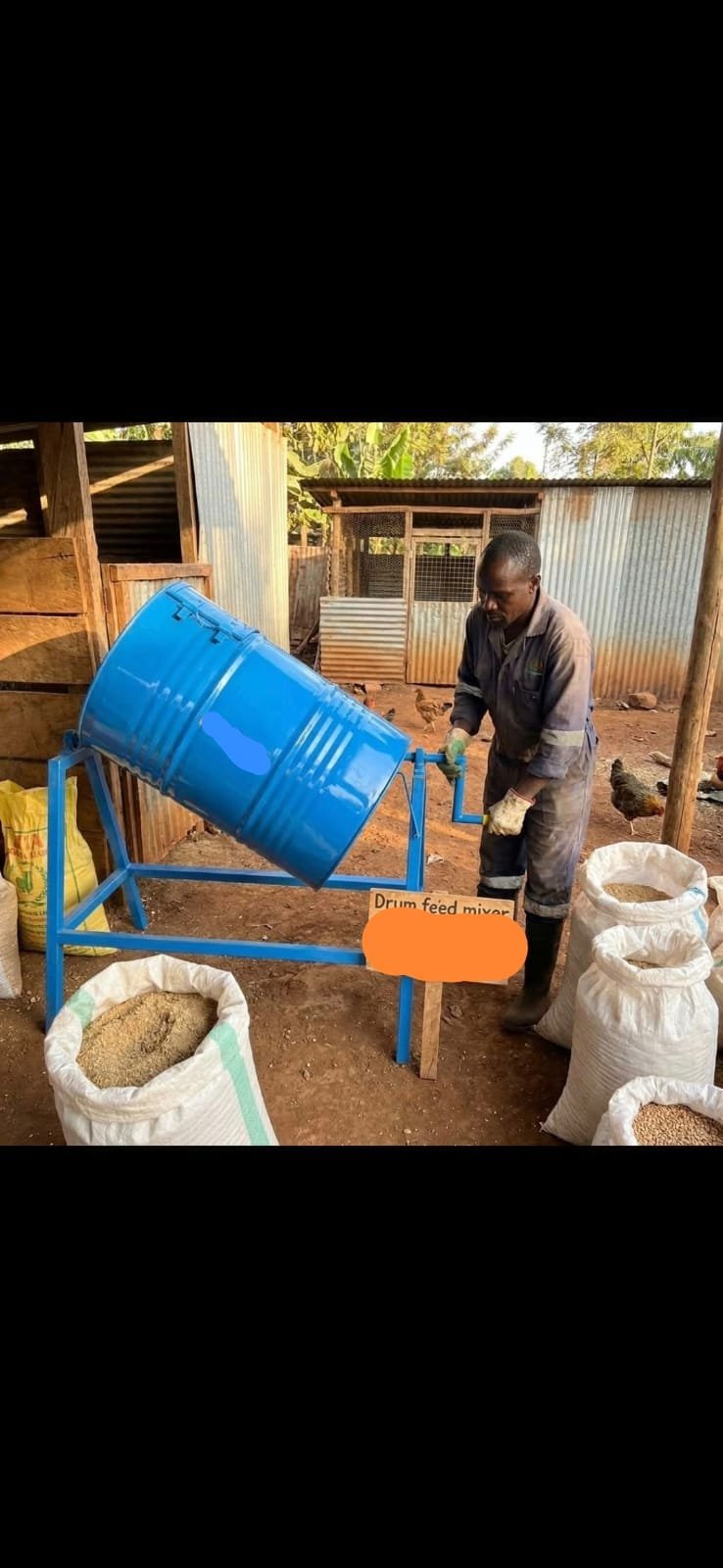
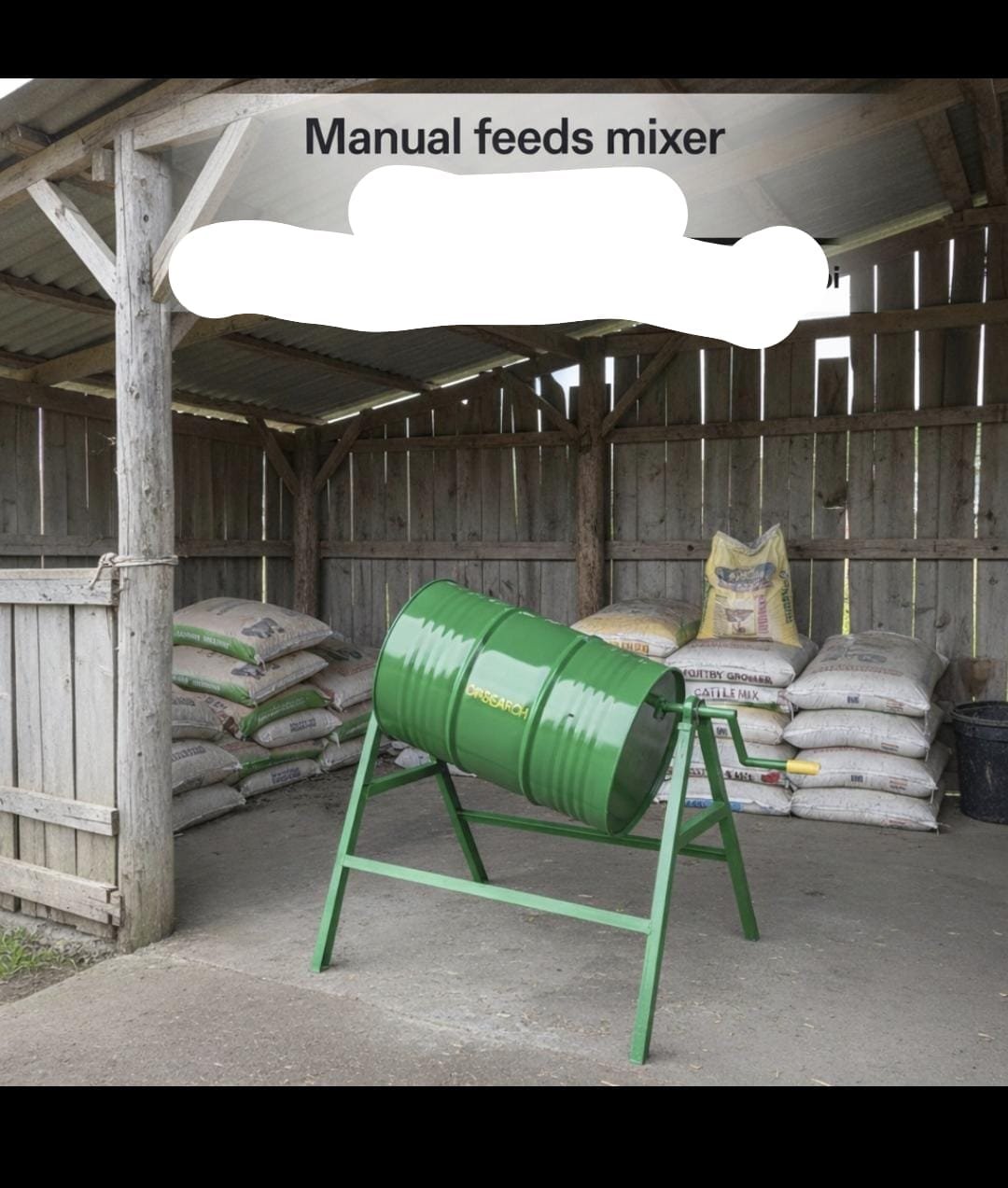
The Drum Manual Feed Mixer is a practical agricultural tool designed to help farmers mix animal feed ingredients manually to achieve a more uniform blend. It is suitable for livestock farmers, poultry producers, small-scale feed manufacturers, and agricultural businesses looking for a simple, convenient way to prepare animal feed without relying on an electrically powered mixing system.
This manual feed mixer uses a drum-style mixing design to combine compatible feed ingredients through manual operation. It can help simplify the preparation of feed mixtures containing ingredients such as grains, crushed cereals, bran, and other suitable dry feed components, depending on the drum design and the manufacturer’s recommendations.
For farms that prepare animal feed regularly, a manual drum feed mixer can help improve the organization of feed preparation, reduce the effort involved in mixing ingredients by hand, and support more consistent mixing practices. Its manually operated design may also be useful in locations where electricity is unavailable or where a simple mixing solution is preferred.
Whether you are preparing feed for poultry, cattle, goats, sheep, pigs, or other farm animals, the Drum Manual Feed Mixer offers a practical option for small-scale and general farm feed preparation, provided the ingredients and batch size are compatible with the machine.
One of the main advantages of a manual drum feed mixer is its ability to operate without an electric motor, provided the model is entirely manually powered.
This makes it a useful option for farms that prefer a straightforward mixing process or operate in areas where electricity access is limited. Manual operation also avoids dependence on an electric drive system and can simplify everyday use.
The effort required to operate the mixer will depend on its drum size, loading level, mixing mechanism, and the weight of the ingredients.
The drum-style design provides a contained space where suitable feed ingredients can be combined through manual movement or rotation, depending on the model’s configuration.
As the drum is operated, ingredients move within the mixing chamber, helping distribute them throughout the batch. Correct loading and sufficient mixing time are important for achieving a consistent blend.
The actual mixing performance depends on the drum design, the characteristics of the ingredients, and the quantity loaded into the mixer.
Mixing feed ingredients properly is important when preparing rations containing multiple components. A manual drum feed mixer helps combine compatible ingredients in one batch, potentially providing a more consistent result than unstructured hand mixing.
It can be used for suitable dry feed ingredients such as:
Crushed grains and cereals.
Maize meal and other compatible grain products.
Wheat bran and similar feed ingredients.
Selected dry livestock feed components.
Other approved ingredients suitable for the machine’s mixing mechanism.
Very fine powders, damp materials, sticky ingredients, liquids, and ingredients with significantly different particle sizes may require special consideration. Check the manufacturer’s recommendations before mixing these materials.
The Drum Manual Feed Mixer can be a practical addition to farms that prepare feed in batches instead of purchasing fully prepared commercial feed.
It may help farmers organize ingredient preparation and mixing for daily or periodic feeding requirements. The ideal batch size will depend on the mixer capacity and the physical effort required for manual operation.
Before purchasing, confirm the drum capacity and recommended working load to ensure the machine can handle your typical feed quantities efficiently.
Depending on the ingredients and the feed formulation being prepared, a manual drum feed mixer may be used to prepare feed blends for different farm animals, including:
Poultry: For mixing compatible dry feed ingredients into poultry rations.
Cattle: For preparing suitable dry concentrate mixtures.
Goats and sheep: For mixing appropriate supplementary feed ingredients.
Pigs: For combining compatible ingredients into formulated feed.
Other livestock: For general feed preparation where the mixture is suitable for the animal.
The mixer does not determine the nutritional suitability of a ration. Feed formulations should meet the nutritional requirements of the intended animals, and ingredients should be measured according to an appropriate feed formula.
A manually operated drum feed mixer offers a straightforward alternative to more complex powered mixing machinery. Depending on its design, it may require fewer electrical components and can be practical for farms seeking a simple feed preparation tool.
Cleaning, inspection, lubrication, and other maintenance needs depend on the materials and mechanisms used in the specific model.
Improved mixing efficiency: Helps combine multiple compatible feed ingredients within a dedicated mixing chamber.
Reduced hand-mixing effort: Offers a structured alternative to mixing feed ingredients entirely by hand, although manual operation still requires physical effort.
No electrical power required: Suitable for models designed for fully manual operation and useful where electricity is unavailable.
Flexible feed preparation: Supports a range of compatible dry feed ingredients and livestock feeding applications.
Convenient batch mixing: Allows farmers to prepare manageable quantities of feed according to their requirements.
Practical for farm use: Provides a straightforward mixing option for small farms, livestock keepers, and agricultural enterprises.
Supports feed consistency: Helps distribute compatible ingredients throughout a batch when the mixer is loaded and operated correctly.
The Drum Manual Feed Mixer is intended primarily for mixing compatible feed ingredients. Common potential applications include the following:
Poultry farmers can use an appropriate manual mixer to combine compatible dry ingredients according to a formulated poultry feed ration. Uniform mixing is particularly important when the recipe contains small quantities of premixes or other ingredients that must be distributed throughout the batch.
Cattle, goat, and sheep farmers may use the mixer to combine suitable concentrate ingredients and prepare supplementary feed mixtures. The ingredients and resulting ration should be appropriate for the animals being fed.
Farmers and small agricultural businesses that prepare animal feed in batches can use a manual drum mixer to support their routine production process, provided its capacity meets their needs.
The mixer may be used for other compatible feed ingredients where the material characteristics and required mixing quality suit its design.
Important: Do not assume that the mixer is suitable for wet feed, liquid additives, medicine, or every type of powder. Confirm material compatibility, cleaning requirements, and whether the unit is intended for feed production with your supplier.
| Specification | Details |
|---|---|
| Product name | Drum Manual Feed Mixer |
| Equipment type | Manually operated feed mixing equipment |
| Primary function | Mixing compatible animal feed ingredients |
| Operating method | Manual operation, depending on model design |
| Power requirement | No electricity required for fully manual models |
| Mixing capacity | Confirm with the supplier |
| Drum material | Confirm with the supplier |
| Drum dimensions | Confirm with the supplier |
| Suitable ingredients | Compatible feed materials approved for the machine |
| Intended users | Livestock farmers and small-scale feed producers |
| Warranty | Confirm with the supplier |
Note: The product’s exact capacity, construction materials, drum dimensions, mixing mechanism, and recommended batch size have not been provided. Confirm these details before purchasing.
For efficient and consistent feed mixing, follow the manufacturer’s operating instructions. A typical workflow for a manual mixer may include these steps:
Prepare the ingredients: Measure each feed component according to the intended feed formulation.
Check the mixer: Ensure the drum, handle, supports, and moving parts are secure and clean before use.
Load the drum: Add the ingredients without exceeding the manufacturer’s recommended working capacity.
Operate the mixer: Rotate or operate the mixing mechanism as instructed to distribute the ingredients throughout the batch.
Check the mixture: Confirm that the feed appears evenly blended, paying attention to ingredients that may separate or remain concentrated in one area.
Unload and store: Remove the finished mixture safely and store it in a clean, dry, appropriately protected container.
When mixing ingredients that contain small quantities of supplements or premixes, use accurate measurements and follow an appropriate mixing sequence to help distribute these components evenly.
Proper cleaning and maintenance can help keep a manual drum feed mixer in good working condition and reduce the risk of cross-contamination between feed batches.
Remove leftover feed after each mixing session.
Clean the drum according to the manufacturer’s instructions.
Allow components to dry thoroughly when moisture has been introduced during cleaning.
Inspect the handle, bearings, supports, fasteners, and other moving components regularly.
Lubricate moving parts only as recommended by the manufacturer.
Keep the machine in a clean, dry location when not in use.
Avoid mixing chemicals or non-feed materials in equipment intended for animal feed unless explicitly approved.
Good hygiene practices are particularly important when preparing feed for different animal groups or when switching between ingredients.
The Drum Manual Feed Mixer is a practical solution for farmers who need a straightforward way to combine compatible feed ingredients without relying on an electrically powered mixing machine. Its drum-based design can support organized batch preparation, while its manual operation makes it an option for small-scale farms and agricultural settings with limited access to electricity.
When choosing a manual feed mixer, consider the volume of feed you need to prepare, the type of ingredients you use, the physical effort required for operation, the quality of the mixing result, and the ease of cleaning. Confirming the mixer’s capacity and construction will help ensure that it suits your daily farm requirements.
For farmers preparing their own feed, a suitable manual mixer can help simplify routine operations and support consistent ingredient blending as part of an effective animal feeding program.
Fast, reliable delivery to all regions nationwide.
100% genuine and certified products.
Manufacturer-backed warranty on all products.


Reviews
There are no reviews yet.