KSh335,000.00 Original price was: KSh335,000.00.KSh330,000.00Current price is: KSh330,000.00.
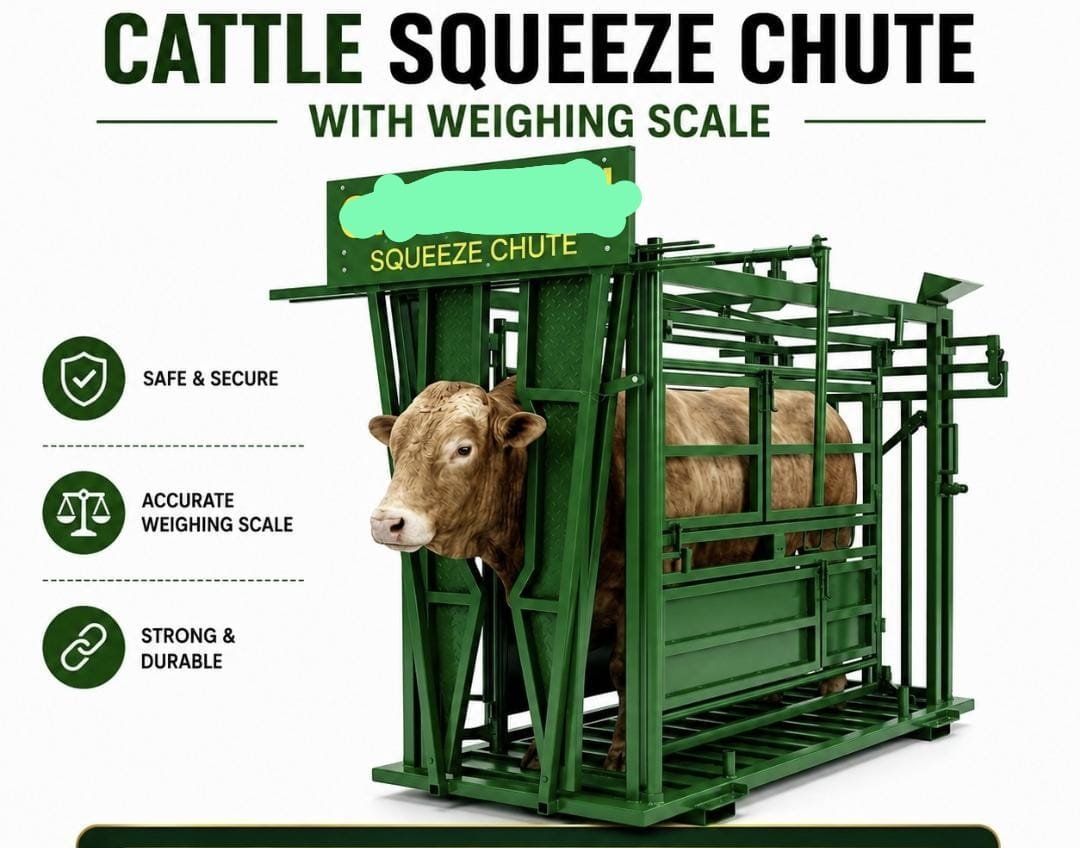
Integrated Weighing Scale: Combines cattle restraint and weighing in one system for convenient livestock management.
Secure Cattle Restraint: Helps hold cattle in a controlled position during weighing and suitable handling procedures.
Accurate Liveweight Measurement: Supports routine cattle weighing, subject to proper calibration and scale specifications.
Heavy-Duty Construction: Designed for demanding livestock handling environments, depending on the materials and model.
Improved Farm Efficiency: Helps simplify weighing procedures and reduce unnecessary animal movement.
Livestock Growth Monitoring: Supports weight recording for feeding management, breeding programs, and growth assessment.
Suitable for Dairy and Beef Farms: Ideal for cattle ranches, feedlots, breeding farms, and commercial livestock operations.

The Cattle Squeeze Chute with Weighing Scale is a practical livestock management solution designed to help farmers, ranchers, and livestock handlers safely restrain cattle while measuring their body weight. By combining a cattle restraining chute with an integrated weighing system, this equipment makes routine livestock weighing and handling more organized, efficient, and convenient.
Accurate cattle weighing is an important part of modern livestock farming. It helps farmers monitor animal growth, assess body condition, manage feeding programs, determine appropriate sale weights, and maintain useful livestock records. A cattle squeeze chute with a weighing scale allows these activities to be carried out in one working area, reducing the need to move animals between separate handling and weighing equipment.
The squeeze chute is designed to hold cattle in a controlled position during handling procedures, while the integrated scale measures the animal’s weight. Depending on the model, the equipment may include adjustable restraint mechanisms, gates, a weighing platform, a digital or mechanical indicator, and other features intended to improve handling efficiency.
Whether you operate a dairy farm, beef cattle ranch, livestock breeding operation, feedlot, or commercial cattle enterprise, a cattle squeeze chute with weighing scale can be a valuable addition to your livestock handling facility.
One of the main advantages of this equipment is the combination of cattle restraint and weighing in a single unit. Once the animal is positioned correctly in the chute, the integrated weighing system can measure its body weight without requiring a separate weighing station.
This arrangement can help simplify farm operations by bringing two essential livestock management functions together. It may also reduce unnecessary movement of cattle between handling equipment.
The weighing indicator may be digital or mechanical, depending on the model. Confirm the display type, weighing mechanism, and included accessories before purchasing.
The squeeze chute is designed to restrain cattle during weighing and routine handling procedures. Restraint helps limit unnecessary movement, making it easier for trained handlers to manage the animal while measurements or appropriate procedures are carried out.
Depending on the model, the chute may feature adjustable side panels, a head restraint, entry and exit gates, or other mechanisms that help accommodate different animals.
Correct adjustment is important for animal comfort and handler safety. The chute should be suitable for the size and type of cattle being handled, and operators should follow the manufacturer’s instructions.
Reliable cattle weight measurements help farmers make informed decisions about feeding, breeding, growth monitoring, and marketing.
A cattle squeeze chute with a weighing scale supports regular weight checks, allowing farmers to record animal weights and compare results over time. The usefulness of these measurements depends on the scale’s rated accuracy, calibration, installation, and operating conditions.
For best results, ensure that the weighing system is correctly installed on a stable surface, calibrated as recommended, and maintained in accordance with the manufacturer’s guidelines.
Cattle handling equipment must withstand the physical demands of working with large animals. A well-constructed squeeze chute is intended for repeated use in demanding farm and ranch environments.
The strength, durability, corrosion resistance, and maximum load depend on the materials and construction of the specific model. Buyers should confirm the frame material, protective finish, rated cattle capacity, and maximum weighing load with the supplier.
Routine inspection of structural components, gates, hinges, and restraint mechanisms helps maintain the equipment in good working condition.
Regular cattle weighing helps farmers monitor animal performance and make better-informed management decisions. When weight information is recorded consistently, it can provide useful insight into growth rates, feeding outcomes, and changes in animal condition.
This equipment can support:
Monitoring cattle growth and development.
Tracking liveweight changes over time.
Assessing progress in livestock fattening programs.
Supporting breeding and herd management records.
Estimating sale weights and monitoring market readiness.
Reviewing feeding programs alongside other performance indicators.
Body weight should be considered alongside animal health, body condition, nutrition, and veterinary advice when making livestock management decisions.
The cattle squeeze chute with weighing scale may be suitable for several livestock enterprises, depending on the equipment’s dimensions, restraint design, and rated capacity.
Potential users include:
Dairy farms: For monitoring the weight of cattle as part of herd management.
Beef cattle ranches: For tracking growth and assessing animals before marketing.
Feedlots: For weighing cattle during performance monitoring and management.
Livestock breeding farms: For maintaining weight records on breeding animals.
Commercial cattle farms: For routine weighing and organized livestock handling.
Livestock sales and collection facilities: For weighing cattle where the equipment is suitable for the intended workload.
Two functions in one system: Combines cattle restraint and weighing, helping simplify livestock handling routines.
More efficient weighing: Reduces the need to move cattle between separate restraint and weighing stations.
Better weight record management: Supports regular measurements for monitoring livestock growth and performance.
Improved handling control: Provides a designated area for restraining cattle during weighing and suitable handling procedures.
Support for feeding decisions: Weight records can help farmers evaluate feeding programs alongside body condition and other management information.
Useful for livestock marketing: Helps farmers monitor liveweight when assessing animals for sale, subject to scale accuracy and appropriate weighing practices.
Suitable for routine farm use: Can support livestock operations that require regular weighing and handling of cattle.
Farmers can weigh cattle periodically to track growth and evaluate changes in body weight. Consistent weighing conditions and accurate records help make these comparisons more useful.
In beef production systems, weight measurements can help assess progress during a fattening program and support decisions about feed management and marketing.
Weighing cattle can provide useful information for managing breeding animals. It may support monitoring of growth and body condition, alongside breeding records and veterinary assessments.
A suitable weighing system can help farmers and livestock businesses establish liveweight measurements during buying, selling, and marketing activities. Scale accuracy and calibration are especially important when measurements are used for commercial transactions.
The squeeze chute can provide controlled restraint for suitable handling procedures performed by trained personnel. The animal must be restrained correctly, and the chute must be appropriate for the procedure being undertaken.
| Specification | Details |
|---|---|
| Product name | Cattle Squeeze Chute with Weighing Scale |
| Equipment type | Livestock restraint and weighing system |
| Primary function | Cattle restraint and liveweight measurement |
| Intended animals | Cattle |
| Chute construction material | Confirm with the supplier |
| Weighing scale type | Confirm whether digital or mechanical |
| Maximum weighing capacity | Confirm with the supplier |
| Weighing accuracy | Confirm with the supplier |
| Display or weight indicator | Confirm with the supplier |
| Restraint mechanism | Depends on model configuration |
| Overall dimensions | Confirm with the supplier |
| Power requirements | Confirm for the supplied weighing system |
| Installation requirements | Confirm with the supplier |
| Warranty | Confirm with the supplier |
Note: The exact weighing capacity, scale accuracy, dimensions, construction materials, and included components have not been provided. Verify these specifications with the supplier before purchase.
The correct operating procedure depends on the model, but a typical weighing process involves the following steps:
Inspect the equipment: Check the chute, gates, restraint mechanism, weighing platform, and scale indicator before use.
Confirm scale readiness: Ensure the scale is correctly installed, zeroed, and calibrated according to the manufacturer’s instructions.
Guide the animal into the chute: Move cattle calmly through a suitable handling facility and into the designated restraining area.
Position and restrain the animal: Adjust the restraint mechanism according to the animal’s size and the equipment instructions.
Take the weight measurement: Allow the weighing system to stabilize as recommended before recording the reading.
Release the animal safely: Follow the prescribed opening sequence and direct the cattle into a safe exit area.
Record the result: Store the weight alongside the animal’s identification and date to support ongoing livestock management.
Only trained personnel should operate the chute. Keep hands and other body parts away from moving gates and restraint mechanisms, and never work in a position where a restrained animal could crush or trap the operator.
Regular maintenance helps preserve the performance of both the restraint structure and the weighing scale.
Inspect the chute frame, gates, hinges, fasteners, and restraint mechanisms regularly.
Remove mud, manure, and debris from the chute and weighing platform.
Check the scale indicator, load cells, cables, and connections where applicable.
Calibrate and test the weighing system according to the manufacturer’s recommendations.
Protect electronic components from moisture and physical damage as instructed.
Lubricate moving parts where required by the equipment manufacturer.
Arrange repairs for damaged components before returning the equipment to service.
Keep the surrounding area well drained and free of obstructions.
For commercial livestock weighing, calibration and verification are particularly important. Where weights are used for trade, follow the applicable local requirements for legal-for-trade weighing equipment.
The Cattle Squeeze Chute with Weighing Scale offers a practical way to combine cattle restraint and liveweight measurement in one livestock handling system. It can help farms organize weighing activities, maintain better weight records, and reduce the movement required during routine handling.
For livestock businesses that regularly monitor cattle growth, prepare animals for sale, or manage feeding and breeding programs, an integrated chute and scale can help make weight collection more convenient.
Before purchasing, consider your herd size, the physical dimensions of your cattle, the required weighing capacity, scale accuracy, restraint features, available handling space, and installation conditions. Choosing equipment that matches your operation will help improve usability, safety, and long-term value.
Fast, reliable delivery to all regions nationwide.
100% genuine and certified products.
Manufacturer-backed warranty on all products.


Reviews
There are no reviews yet.