KSh15,000.00 Original price was: KSh15,000.00.KSh10,500.00Current price is: KSh10,500.00.
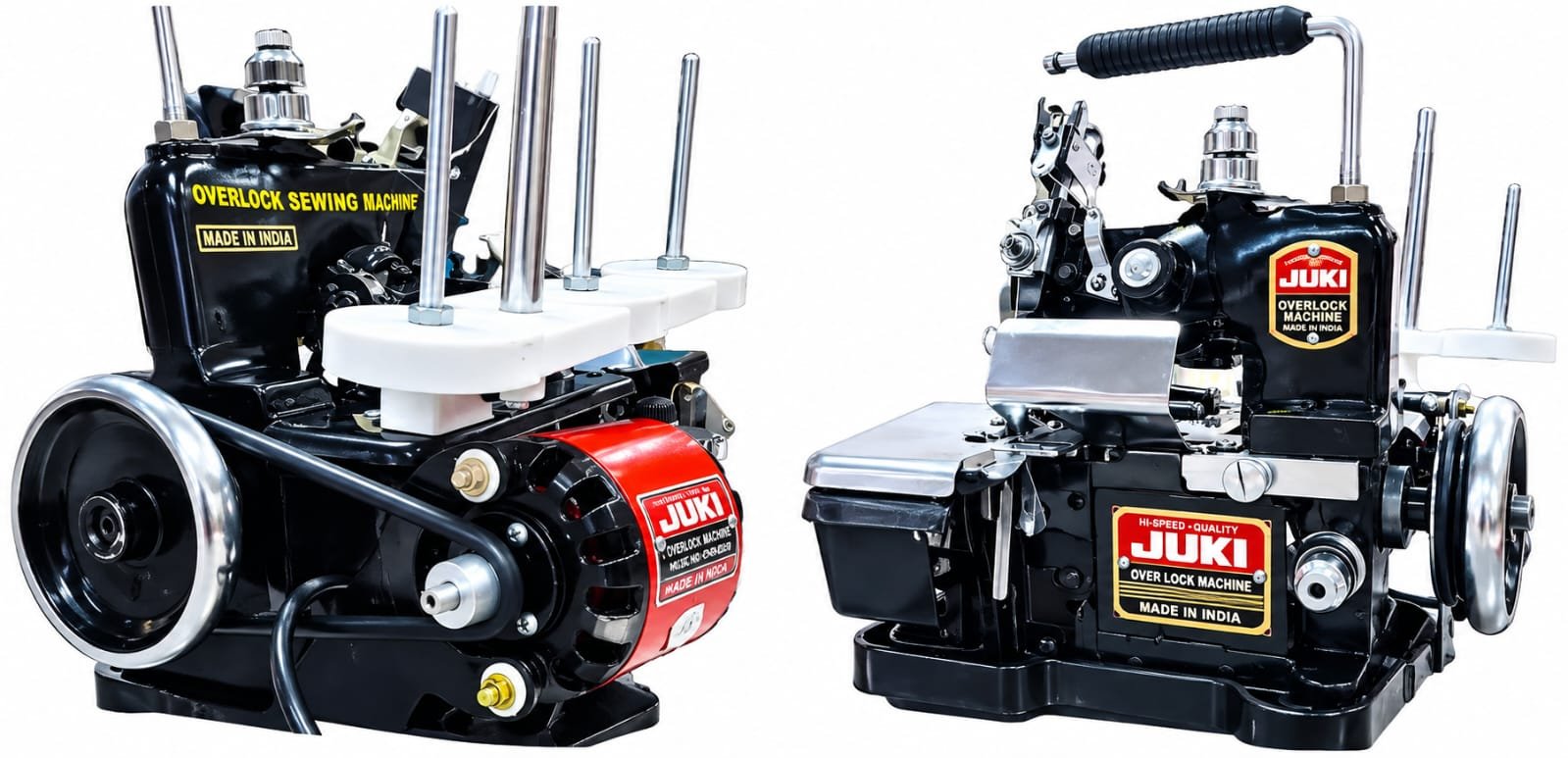
Juki Overlock Sewing Machine: Designed for neat fabric-edge finishing and professional garment sewing.
Supplied with Motor: Supports powered sewing for efficient and convenient operation.
Professional Edge Finishing: Helps prevent fabric edges from fraying and creates clean, tidy seams.
Versatile Garment Applications: Suitable for tailoring, clothing production, fashion workshops, and garment manufacturing.
Improved Sewing Efficiency: Helps streamline repetitive stitching and fabric-finishing tasks.
Consistent Stitch Quality: Produces neat overlock seams when correctly threaded and adjusted.
Made in India: Country of origin specified as India; verify the product label and model details with the supplier.

The Juki Overlock Machine with Motor, Made in India, is designed for garment makers, tailors, fashion designers, clothing manufacturers, and sewing businesses that require neat, professional finishing along fabric edges. An overlock sewing machine helps stitch, trim, and finish fabric edges to reduce fraying and create clean seams, making it an important piece of equipment for garment production and textile work.
Whether you operate a tailoring shop, garment workshop, fashion studio, or clothing manufacturing business, an overlock machine can help improve the quality and consistency of your sewing work. It is particularly useful for finishing raw fabric edges, joining compatible fabric pieces, and producing professional-looking seams on many types of garments.
This model is supplied with a motor, providing powered operation for sewing tasks. The motor helps drive the machine’s sewing mechanism, reducing reliance on manual operation and supporting a more efficient workflow. The exact motor type, power rating, operating speed, and stitch configuration depend on the specific model and should be confirmed with the supplier.
The Juki Overlock Sewing Machine with Motor Made in India is an option for sewing professionals and garment businesses looking for practical equipment to support everyday sewing and fabric finishing operations.
The primary function of an overlock sewing machine is to finish fabric edges using an overlocking stitch. This stitch wraps thread around the edge of the fabric, helping prevent fraying and giving the garment a neater appearance.
Overlock stitching is widely used in garment manufacturing because it creates clean fabric edges and can support efficient seam finishing. The stitch appearance and strength depend on the machine’s configuration, thread selection, fabric type, and correct tension settings.
This Juki overlock machine is described as being supplied with a motor, allowing the machine to operate using powered stitching.
A motor-driven sewing machine can help reduce the repetitive effort associated with manual operation and support regular garment production. The actual sewing speed and operating characteristics depend on the motor and machine configuration.
Before purchasing, confirm whether the motor is included in the supplied package, as well as its power rating, voltage requirements, and compatibility with your available electrical supply.
One of the most important benefits of an overlock sewing machine is its ability to finish raw fabric edges neatly. Unfinished fabric edges may unravel during handling, washing, or repeated use. Overlocking helps contain these edges and improve the overall appearance of the garment.
This feature is especially useful for clothing businesses that require clean internal seams and consistent finishing across multiple garments.
Depending on its stitch configuration, an overlock machine can help join compatible fabric pieces while finishing their edges at the same time.
This can support various stages of garment construction, including assembling seams and finishing fabric edges. The specific tasks the machine can perform depend on its available stitch types, thread configuration, and suitability for the material being sewn.
For operations that require specialised seam types, confirm the machine’s capabilities before purchasing.
The Juki overlock machine may be suitable for a wide range of sewing environments, including:
Its suitability for a particular business depends on the types of garments produced, production volume, fabric characteristics, and the machine’s specifications.
This product is described as Made in India. Buyers should verify the exact model designation and country-of-origin details on the machine’s label or manufacturer documentation to ensure that the supplied product matches their requirements.
Checking the model information also helps when sourcing compatible accessories, replacement parts, needles, and technical support.
Consistent stitching is important for producing professional-looking garments. A properly set up and maintained overlock machine can help create uniform edge finishing across repeated sewing tasks.
Good results depend on correct thread threading, needle condition, tension adjustment, suitable thread, and selecting settings appropriate for the fabric being sewn.
Professional garment finishing: Helps create neat fabric edges and reduce fraying.
Improved sewing efficiency: Motor-driven operation can help streamline repetitive sewing tasks.
Consistent seam appearance: Supports uniform edge finishing when correctly adjusted and maintained.
Versatile sewing applications: Can be used for different compatible fabrics and garment types, depending on the model’s stitch configuration.
Better production workflow: Helps integrate edge finishing into garment assembly and clothing production.
Suitable for business use: Useful for tailors, garment makers, fashion designers, and clothing production workshops.
Motor included: Offers a powered sewing setup, subject to confirmation of the supplied motor specifications.
Made-in-India product specification: Provides a country-of-origin detail for buyers to verify when comparing sewing machine options.
Tailors can use an overlock sewing machine to finish raw fabric edges and improve the appearance of garment seams. It can be useful when making new garments, adjusting clothing, or completing edge-finishing work.
The exact suitability for repairs depends on the garment, fabric type, and required stitch.
Overlock stitching is commonly used in assembling many types of casual garments. Depending on the machine’s configuration, it may be suitable for sewing compatible knit or woven materials used in T-shirts, tops, casual trousers, and similar clothing.
Confirm the model’s stitch configuration and fabric compatibility for the garments you intend to produce.
Uniform producers can use overlock machines for edge finishing and compatible seam construction as part of a broader garment production process.
A suitable overlock machine can help establish consistent finishing methods across repeated production runs.
Fashion designers and garment makers can use overlock stitching to finish internal seams, prepare fabric edges, and support garment assembly.
The machine can complement other sewing equipment, such as a straight-stitch sewing machine, which performs different types of stitching tasks.
For small tailoring businesses and clothing workshops, an overlock machine can expand the range of finishing services offered and help improve the consistency of completed garments.
Before selecting a machine, consider the type of clothing you produce, daily workload, available workspace, and the accessories or stitch types required.
Sewing schools and vocational training centres may use an overlock machine to teach fabric-edge finishing and garment construction techniques. Proper instruction in threading, tension adjustment, safe operation, and maintenance is essential.
An overlock machine differs from a conventional straight-stitch sewing machine because it uses an overlocking stitch to wrap threads around the edge of the fabric.
Depending on the model, an overlock machine may use different thread and needle configurations to produce various types of overlock stitches. Some overlock systems also trim the fabric edge as they sew, helping produce a clean finish.
An overlock machine is not necessarily a replacement for every other sewing machine. Many garment workshops use an overlocker alongside a straight-stitch machine because each performs different functions within the garment production process.
Before purchasing, confirm the number of threads, stitch types, cutting mechanism, and other functions available on this particular Juki model.
Correct setup and operation are important for achieving neat stitches and protecting the equipment.
Always switch off the machine and disconnect the motor from its power source before changing needles, cleaning, threading adjustments that require access to moving parts, or carrying out maintenance.
Regular maintenance helps support reliable operation and consistent stitch quality.
Follow the maintenance schedule supplied for the exact model, as lubrication and servicing requirements may differ between machines.
To make sure the Juki overlock machine suits your sewing needs, confirm the following details with the supplier:
Verifying these specifications will help you choose the right machine for your garment production requirements.
The Juki Overlock Machine with Motor, Made in India, is an option for tailoring businesses, garment manufacturers, fashion designers, and sewing workshops that need equipment for professional fabric-edge finishing.
Its overlock stitching function can help reduce fraying and create neater garment seams, while the supplied motor supports powered operation. When correctly set up and maintained, an overlock machine can help improve the consistency and organisation of everyday sewing work.
Before making a purchase, confirm the exact model, thread configuration, motor specifications, supported materials, included accessories, and warranty. Choosing equipment that matches your garment types and production requirements will help you get the best value from your sewing machine.
Fast, reliable delivery to all regions nationwide.
100% genuine and certified products.
Manufacturer-backed warranty on all products.
Reviews
There are no reviews yet.