KSh55,000.00 Original price was: KSh55,000.00.KSh51,000.00Current price is: KSh51,000.00.
Powerful 3HP Motor: Designed for efficient grinding and crushing of suitable grains and dry feed ingredients.
Hammer Mill Grinding System: Uses rotating hammers to break compatible materials into smaller particles.
Animal Feed Preparation: Suitable for processing ingredients for poultry, cattle, goats, sheep, pigs, and other livestock.
Adjustable Grinding Size: Different screen sizes may be available to achieve coarse or finer grinding, depending on the model.
Reduced Manual Labour: Helps save time and effort compared with manual grain crushing.
Versatile Agricultural Use: Ideal for livestock farms, poultry farms, and small-scale animal feed processing businesses.
Improved Feed Processing: Helps prepare ground ingredients for mixing into balanced animal feed formulations.

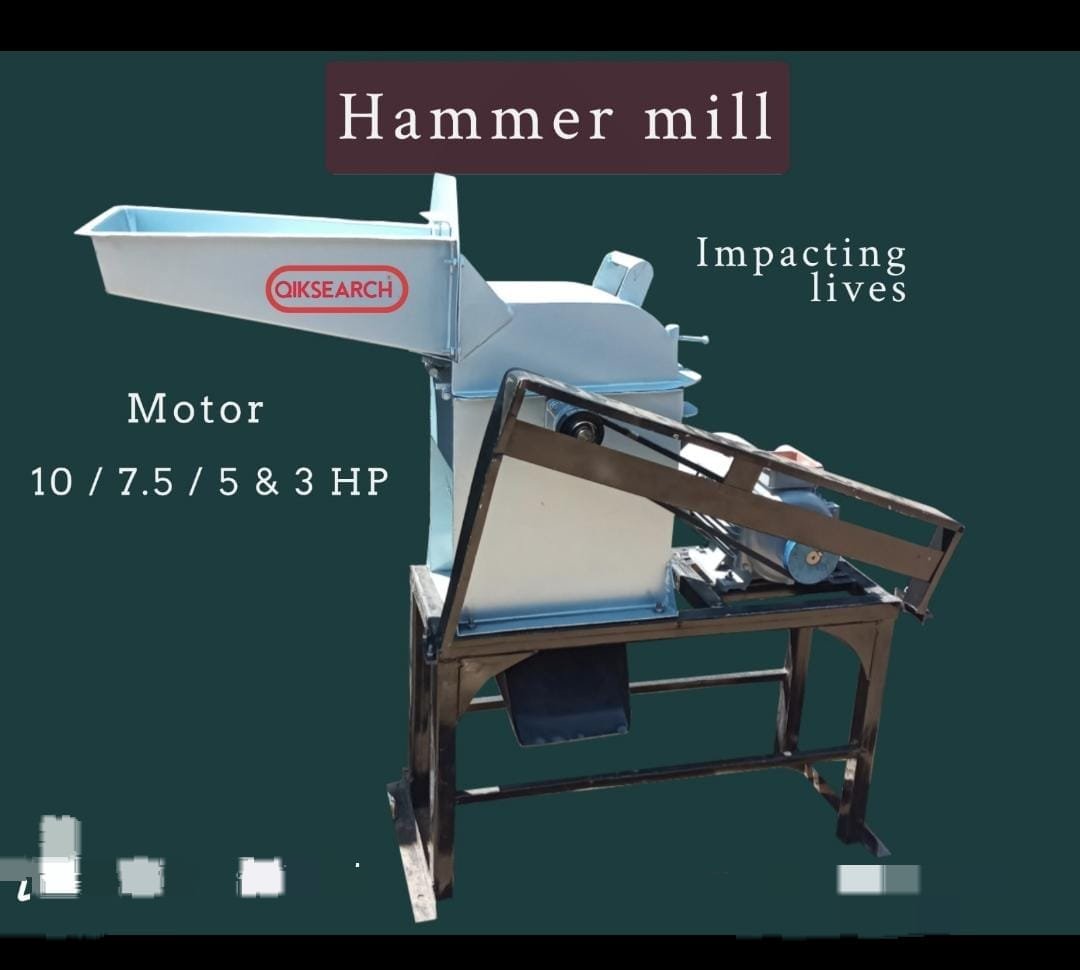
The 3HP Hammer Mill / Animal Feed Crusher is an agricultural processing machine designed to crush, grind, and reduce suitable grains and other compatible dry feed ingredients into smaller particles for animal feed preparation. Powered by a 3-horsepower motor, this machine offers a practical solution for farmers, livestock keepers, poultry producers, and small-scale feed processors who want to simplify feed preparation and reduce manual grinding.
Preparing animal feed often involves processing grains and other ingredients into a suitable particle size before mixing them into a balanced feed formulation. A hammer mill helps mechanize this process by using a rotating hammer mechanism to break down compatible materials inside a grinding chamber. Depending on the machine’s configuration and screen size, the finished material can range from coarse crushed grains to finer ground particles.
The 3HP hammer mill animal feed crusher can be a valuable addition to farms that prepare their own feed for poultry, cattle, goats, sheep, pigs, and other livestock. By processing suitable raw materials on the farm, users can organize feed preparation more efficiently and have greater control over the particle size of ingredients used in their feed mixtures.
Whether you operate a smallholder farm, poultry enterprise, livestock farm, or agricultural feed preparation business, this hammer mill provides a mechanized option for grinding compatible materials as part of your feed production process.
The machine is equipped with a 3-horsepower (3HP) motor designed to drive the hammer mill’s grinding mechanism.
This motor power rating makes the machine an option for agricultural operations seeking a compact grinding solution for suitable feed ingredients. Powered grinding can reduce the manual effort associated with crushing grain and help streamline routine feed preparation.
Actual grinding performance depends on the machine’s design, material type, moisture content, selected screen size, and the condition of the grinding components.
Before purchasing, confirm the motor type, power supply requirements, voltage, phase, and other electrical specifications with the supplier.
A hammer mill works by using rotating hammers to strike and break down suitable materials inside a grinding chamber. The material is reduced in size through repeated impact until the particles are small enough to pass through the installed screen.
This design is commonly used for processing compatible grains and dry agricultural ingredients. The resulting particle size depends on the hammer configuration, screen openings, feed rate, and characteristics of the material being processed.
The hammer mechanism is intended for crushing and grinding, rather than blending finished feed ingredients into a uniform ration. A separate feed mixer may be needed after grinding when multiple ingredients must be combined.
The 3HP hammer mill is designed to process compatible materials used in animal feed preparation. Depending on the machine’s specifications, potential materials may include:
Material compatibility should always be confirmed before use. Wet, oily, sticky, fibrous, or excessively hard materials may not be suitable for every hammer mill.
The screen or sieve fitted inside a hammer mill helps determine the size of the material discharged from the grinding chamber.
A screen with larger openings generally allows coarser particles to pass through, while smaller openings can produce a finer grind, subject to the machine design and material characteristics.
Depending on the model, interchangeable screens may be available for different grinding requirements. Confirm the available screen sizes and replacement options before purchasing.
Selecting an appropriate particle size is important because different animals and feed formulations may require different feed textures.
Crushing grain by hand can be time-consuming and physically demanding, especially when preparing feed regularly or handling larger quantities.
A motorized animal feed crusher helps mechanize this task and can reduce dependence on manual crushing methods. For farmers who process their own feed ingredients, it can help make the preparation process more organized and manageable.
The amount of time saved depends on processing volume, material type, screen size, and the machine’s rated capacity.
A 3HP hammer mill can help farmers process suitable raw ingredients before mixing them into animal feed. This can be useful for farms that prefer to handle some stages of feed preparation themselves.
By grinding compatible grains into the required particle size, the machine supports the preparation stage of a wider feed production workflow. Feed ingredients should then be measured and mixed according to an appropriate nutritional formula for the intended animal.
The 3HP motor rating makes this model worth considering for farms and small-scale feed preparation businesses with moderate grinding requirements.
Its suitability will depend on the daily amount of material to be processed, the desired fineness, the type of ingredients, and the available power supply. Confirm the rated grinding capacity before purchasing to ensure that the machine meets your production needs.
Efficient grain grinding: Mechanizes the crushing of compatible grains and dry feed ingredients.
Reduced manual labour: Helps minimize the physical effort required to crush grains by hand.
Flexible particle size: Supports different grinding requirements when suitable screen sizes are available.
Improved feed preparation: Produces ground ingredients that can be used in suitable feed formulations.
Convenient on-farm processing: Allows farmers to process compatible raw materials before mixing or further preparation.
Versatile agricultural application: Can support poultry, livestock, and other suitable feed preparation operations.
More organized workflow: Helps streamline the grinding stage of animal feed production.
Practical motorized solution: Offers powered grinding for farms that need more than manual crushing equipment.
Poultry farmers may use a hammer mill to grind compatible grains and other dry ingredients before preparing poultry feed. The appropriate particle size depends on the bird species, age, feeding system, and formulation.
The machine can support ingredient preparation, but the finished poultry ration should still meet the birds’ nutritional requirements.
Cattle farmers can use a suitable hammer mill to process compatible cereal grains and other approved dry feed ingredients for concentrate production.
The resulting ground material can be combined with other ingredients according to an appropriate cattle feed formulation. The required particle size depends on the feed type and the animals’ needs.
Goat and sheep farmers may use the crusher to process suitable grains and dry feed ingredients for supplementary feed preparation.
Any ground ingredients should be used as part of a balanced feeding program, with appropriate forage and other nutrients supplied according to the animals’ nutritional requirements.
Pig farmers and small-scale feed processors can use a compatible hammer mill to grind cereal grains and selected dry ingredients before mixing them into formulated pig feed.
Correct particle size and uniform mixing are important considerations when preparing feed for pigs.
Agricultural businesses producing feed in manageable batches may consider a 3HP hammer mill for the grinding stage of production.
Before using the machine commercially, confirm its rated capacity, suitability for your materials, grinding consistency, motor requirements, and maintenance costs.
Depending on the machine’s design, the hammer mill may be suitable for other compatible dry grains and agricultural ingredients. Always confirm that the intended material is approved for processing in the machine.
The following product details have not been provided and should be verified with the supplier:
Confirming these details will help ensure that the machine is appropriate for your feed preparation requirements.
Correct operation is important for achieving suitable grinding results and maintaining operator safety. Always follow the manufacturer’s instructions.
Never insert hands or tools into the feed opening while the machine is operating. Keep guards in place and allow all moving components to stop completely before servicing.
Regular maintenance helps preserve the performance and service life of the hammer mill.
Always disconnect and isolate the power source before inspection, cleaning, adjustment, or maintenance.
The appropriate particle size depends on the animal species, age, feeding system, and ingredients being processed. Using the correct screen can help produce feed ingredients better suited to the intended formulation.
Many hammer mills are designed primarily for dry materials. Excess moisture can cause clogging, reduce throughput, or affect grinding performance. Confirm the recommended moisture range and supported materials with the supplier.
Clean grinding chambers and appropriate storage containers help reduce unwanted contamination and support good feed hygiene, particularly when processing ingredients for different animal groups.
Grinding is only one stage of feed preparation. Measure and mix ingredients according to an appropriate feed formula to ensure that the final ration meets the animals’ nutritional requirements.
The 3HP Hammer Mill / Animal Feed Crusher offers a practical solution for farmers and small-scale feed processors who need to grind compatible grains and dry feed ingredients for animal feed preparation. Its hammer-based grinding mechanism helps reduce material size, while the powered motor can reduce the effort required compared with manual crushing.
For poultry farmers, livestock keepers, and agricultural feed businesses, this machine can support the preparation of raw ingredients before they are mixed into a complete feed formulation.
Before purchasing, consider your daily grinding requirements, desired particle size, material type, available power supply, and maintenance needs. Verify the rated processing capacity and compatibility with your intended ingredients to ensure the machine is suitable for your operation.
Fast, reliable delivery to all regions nationwide.
100% genuine and certified products.
Manufacturer-backed warranty on all products.


Reviews
There are no reviews yet.